Skip to content
Fresh Flowers Delivered

How to Keep Cut Flowers Fresh: Simple Tips to Keep Flowers Fresh for Longer

Learn how to keep cut flowers fresh with simple steps: a clean vase, angled stem cuts, flower food, cool spots and fixes for wilting roses and tulips.

7 min read

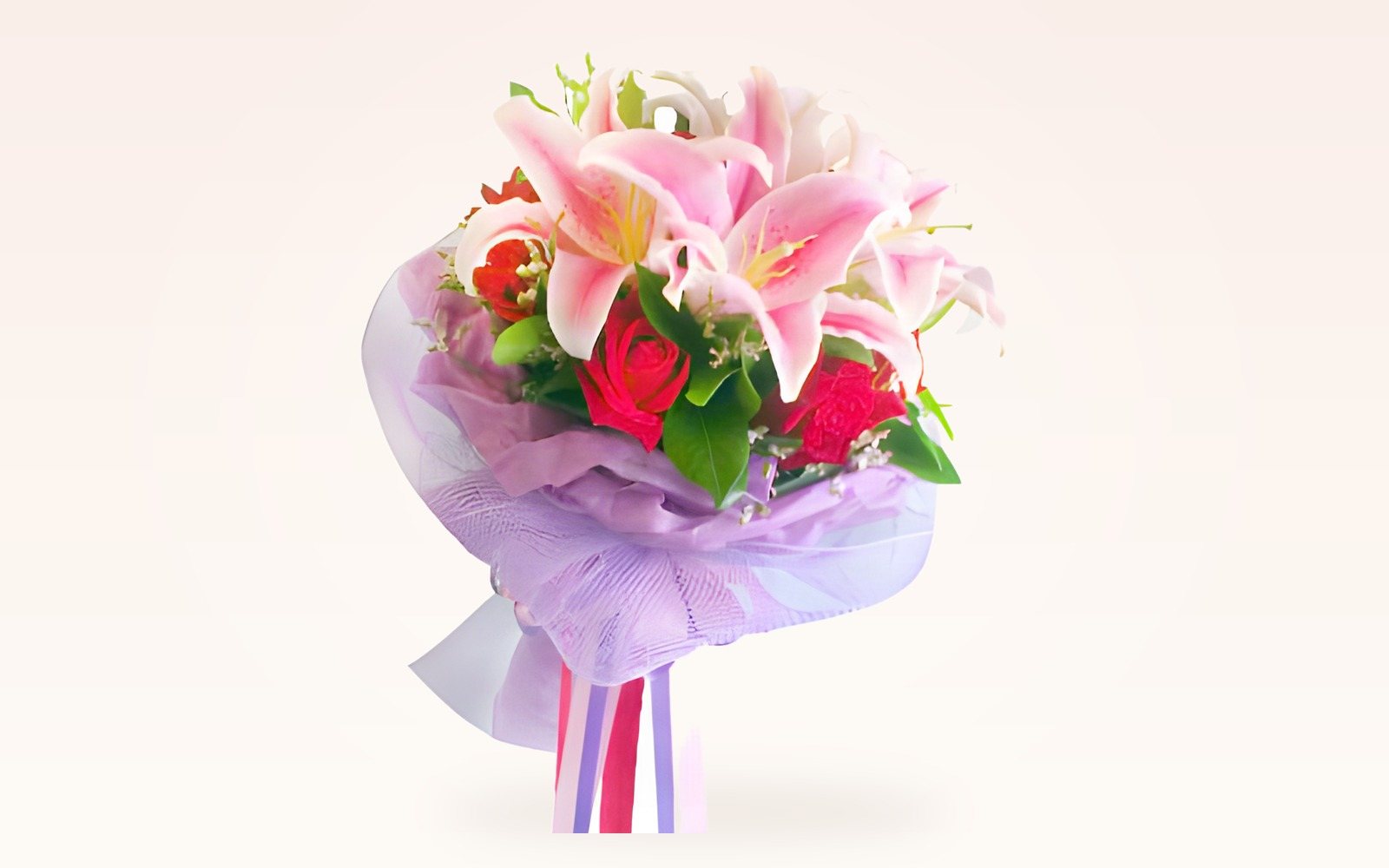
Pink lilies and red roses in a lilac-wrapped hand-tied bouquet

Bouquet: Today Flowers

A bouquet can look perfect on the first day and tired by the fourth, and the difference usually comes down to a handful of habits. Cut flowers are living tissue that has lost its roots, so they depend on stems that can still drink and on water that stays clean. The habits that keep fresh-cut flowers looking their best come down to three things: giving the stems a clear path to water, keeping bacteria out of the vase, and keeping flowers cool, so that a fresh bouquet can stay lovely for as long as possible. This guide walks through each step of flower care, explains what the little packet does, sorts the myths from the methods, and shows how to rescue droopy ones, so you can extend the life of your flowers well past the first weekend.

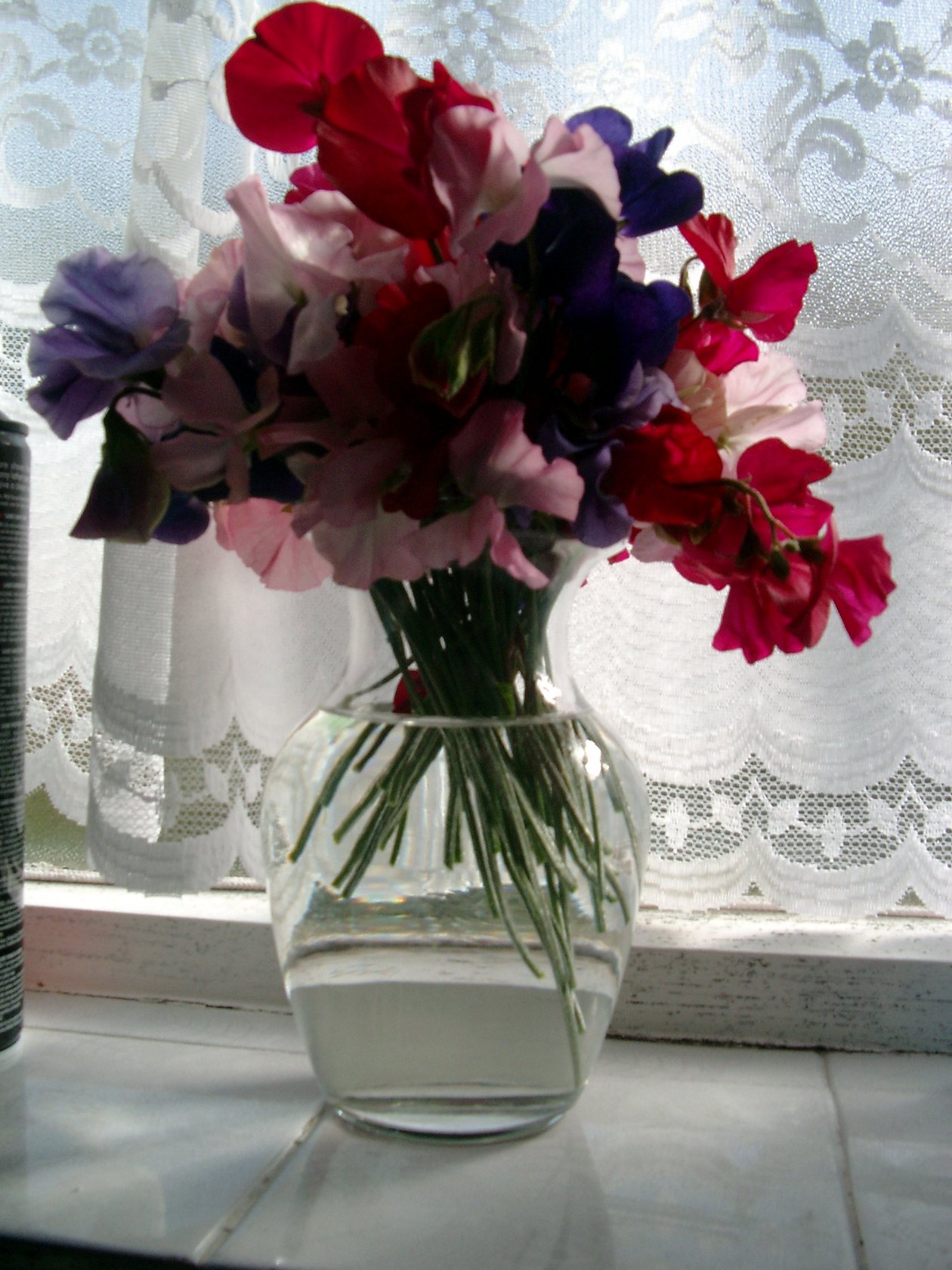
Sweet peas in a clear glass vase beside a window

Photo: Rept0n1x, CC BY-SA 3.0, via Wikimedia Commons

Start with a clean vase

Bacteria are the main enemy of freshly cut flowers. They multiply quickly in warm water, clog the stems and cut short how long they last, and a container that looks clean can still hold a film of them from the last bouquet. Scrub it with hot soapy water before every use. For a vase that has held flowers before, a rinse with a weak bleach solution, about a teaspoon in a quart of water, kills what the soap leaves behind. Rinse it thoroughly afterward. This one habit is the cheapest way to keep bouquets fresh longer.

Give every stem a fresh cut

Start with fresher flowers: choose bunches with firm green stems and buds that are only just opening. When flowers are cut, the stem seals over and a bubble of air can sit in the base, which blocks the water the flower needs. Before placing flowers into a vase, trim the stems; do it as soon as you get the bouquet home. Use sharp scissors or a knife, because dull shears crush the stem and reduce its ability to absorb water. Flowers absorb most of their moisture through the cut end. Cut the stem at a 45-degree angle, taking off one to two inches. The angled cut gives the stem more surface area for water absorption and keeps it from sitting flat on the bottom of the vase, where it cannot drink.

Repeat the cut every couple of days, or whenever you change out the water. If you are gathering stems from the garden, do it early in the morning when the plants are full of water, and put them into a bucket right away.

Remove leaves below the waterline

Leaves that sit in water rot within a day or two. They feed bacteria and fungus, turn the water cloudy and make the whole vase smell. Strip every leaf from the part of the stem that will be underwater, and remove any thorns that are in the way. Leaves above the water can stay.

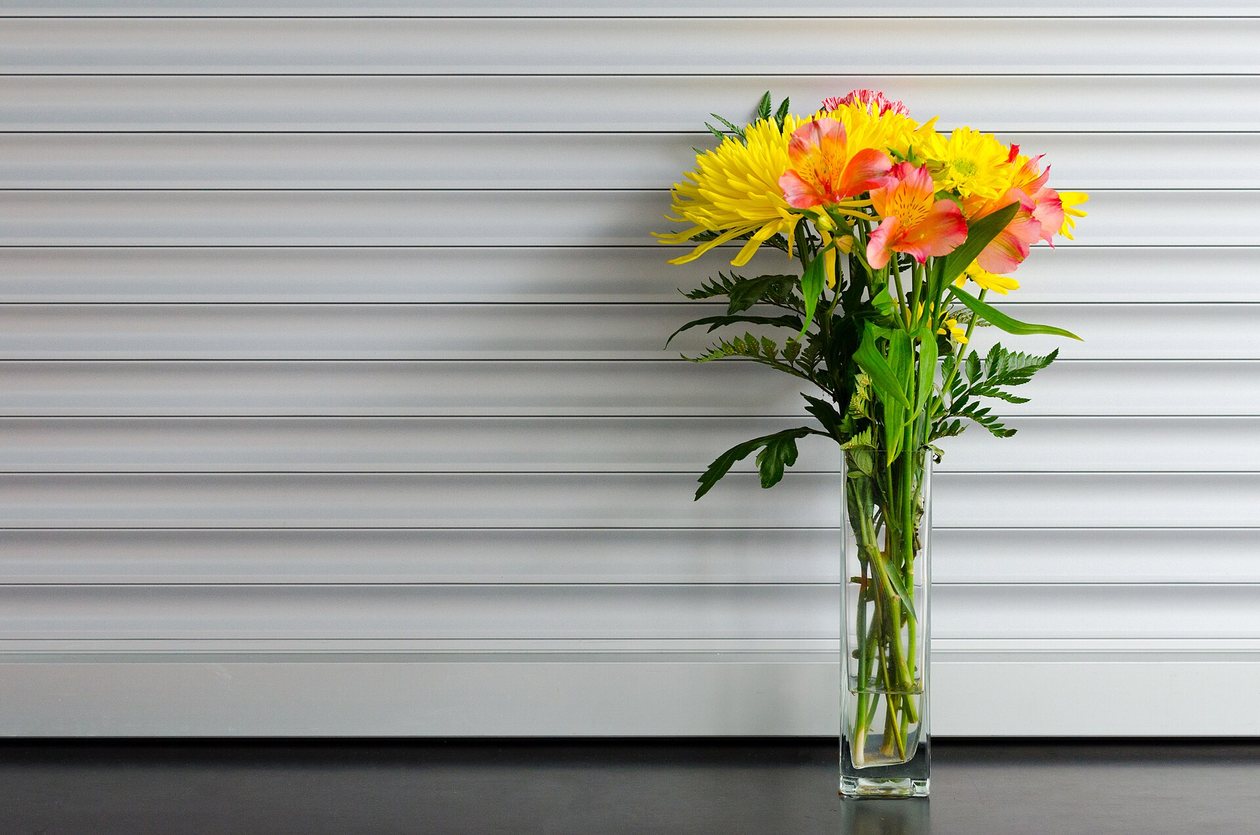
A bunch of yellow and orange flowers in a tall glass vase

Photo: Math builtbymath (CC0), via Wikimedia Commons

Change the water and feed the flowers

Fill the container with cool, fresh water, enough that most of each stem is covered. Flowers drink a lot of water, especially in the first two days, so check the water in the vase daily and keep them hydrated with cool water. For flowers to last, keep the water clean and the level up, so every fresh flower keeps drinking. Roses, hydrangeas and other large flowers can drain a small vase overnight. Keeping flowers hydrated is the single biggest factor in how long they last, and flowers in water that stays clean last longer than those in a murky container.

The little packet of flower food that comes with your bouquet is not a gimmick. It contains three things: sugar for energy, an acidifier that helps the stems draw water up, and a biocide that slows bacteria. Mix it into the water as the packet directs. Without a packet, a simple version can be made at home. For one quart of water, stir in 1 tablespoon of sugar, 2 tablespoons of lemon juice and one half teaspoon of bleach. The sugar feeds the bloom, the lemon juice lowers the pH and the last ingredient controls bacteria.

Whichever you use, change the water every two days at the very least, and every other day in a warm room. Pour out the old water and add a fresh mix, then rinse the container and trim the stems again to keep the flowers fresh. Do not just top off the vase water, because it already carries bacteria and adding plain water only dilutes the mix.

Keep the vase in a cool spot

Heat makes flowers age faster, so a cool room helps flowers stay fresh, and cooler air keeps flowers fresher longer. Cutting down on heat is the easiest way to keep them vibrant. Put the arrangement on a table away from direct sunlight, heating vents, radiators and the top of the television, ideally in a room under 72°F. Drafts from open windows or fans dry out petals and make the blooms wilt, so keeping flowers out of the wind matters too. If you can, move the arrangement to a cooler spot overnight to keep them fresh.

Keep the arrangement away from the fruit bowl too. Ripening apples, bananas and tomatoes give off ethylene gas, a plant hormone that speeds up aging and makes petals drop sooner. Carnations, snapdragons and many other flowers are sensitive to it.

Which tricks work and which are myths

Many popular ways to keep flowers fresh have little support. A copper penny in the vase does not slow bacteria enough to matter. Aspirin does not help, and neither do Epsom salts, which have no proven benefit for cut stems. Sugar alone can make things worse, since it feeds bacteria as well as the flowers, so it only makes sense when it is paired with something that controls them, such as a splash of vinegar. A mix of 2 teaspoons of white vinegar and 2 teaspoons of sugar per quart of water works for a short time, but commercial flower food is more reliable.

Clean water, clean tools and cool air do more than any pantry additive.

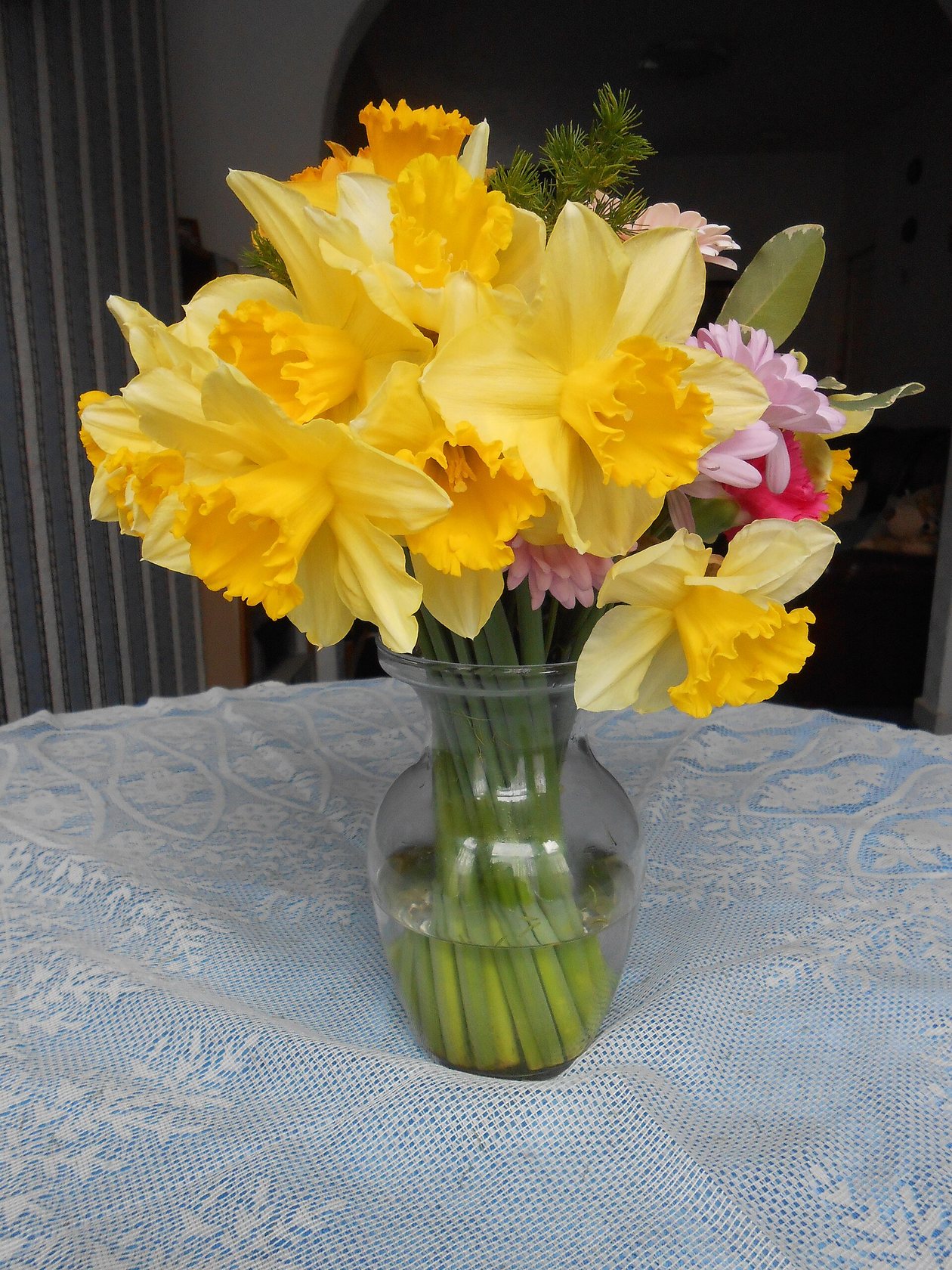
Yellow daffodils in a small glass vase on a lace tablecloth

Photo: Rept0n1x, CC BY-SA 3.0, via Wikimedia Commons

Care for roses, tulips and other popular flowers

Flowers like roses and tulips have their own quirks. Cut a rose at an angle, take off the lowest leaves and thorns, and keep the level high, since a rose drinks heavily. If a rose bends its head, it usually has an air bubble in the stem, and a new cut often fixes it. Tulips keep growing after they are cut and lean toward light, so rotate the vase and trim them again once they stretch. If tulips droop, wrap them snugly in paper, stand them in deep water for a few hours and let them firm up.

Daffodils, also called narcissus, release a sticky sap that harms other flowers. Keep them in their own vase, or let them stand alone in water for several hours before you combine them with other flowers, and do not cut them again after they have been mixed. Pinch the pollen-bearing anthers off lilies to help them last longer and to prevent orange stains on petals and tablecloths. Lilies are toxic to cats, so keep them out of reach of pets.

Hydrangeas wilt fast because the large heads lose water through the petals. Re-cut the stems and submerge the whole head in cool water for 30 minutes, and it often recovers. Carnations and chrysanthemums are among the toughest long-lasting flowers, and with regular water changes the flowers last longer, often two weeks or more. For vibrant flowers with less effort, start with these.

How to revive wilting flowers

When flowers in a vase start to wilt, check the stems first. Cut an inch off the base at an angle, place the stems in lukewarm water with a little flower food and keep them in a cool room for an hour or two. Remove any petals or leaves that have turned brown, because decay spreads to healthy blooms nearby. For soft-stemmed flowers that have gone limp, a short soak in a sink of cool water can help them take up water again. Not every bloom can be saved, but you can keep the rest of the bouquet going by removing the spent flowers and moving the survivors into a smaller vase.

Storing and transporting flowers

If you cannot put the bouquet in a container right away, or you want to keep your bouquet fresh while you travel, wrap the cut ends in a wet paper towel and a plastic bag. When you travel with them, keep them upright in a bucket or a tall container with a little water. Large flower arrangements travel best in a box that wedges the container in place. At home, unwrap them, remove any packaging that holds the stems tight and trim the stems before you arrange them.

Florists keep their flowers in a cooler, and you can do something similar at home. Placing the flowers in the refrigerator overnight, with no fruit nearby, slows aging and can add a day or two to its life. Corsages and boutonnieres keep best in a sealed container in the refrigerator with a lightly damp paper towel, never in the freezer.

How long do cut flowers last?

With proper care, flowers will last between five and ten days. Roses and tulips usually give you five to seven days, and lilies and alstroemeria can reach ten. Trimming the stems, changing out the water and keeping the vase cool can keep a bouquet going longer than usual and add days to its vase life.

Once you know what flowers need, it takes only a few minutes a day to keep your flowers fresh and beautiful. A clean container, a sharp cut, new water with a little food and a cool spot are the habits that matter, and the rest is sitting back to enjoy their beauty.

Megan Holloway writes about keeping cut flowers fresh and making bouquets last. To send a bouquet to Thailand, see the Teleflora International page for Thailand.

Keep reading

All stories
Beyond the Vase: Bringing Pressed Flower Art into Your Home

5 min read

Beyond the Vase: Bringing Pressed Flower Art into Your Home

Remember that fleeting feeling of joy from a bouquet of fresh flowers? Displaying pressed flowers is a magical way to capture and preserve those memories, turning a temporary gift into a timeless piece of art. It’s a creative hobby that allows you to transform a special rose, a wildflower from a hike, or a market bloom into a lasting keepsake. This guide will show you how to give those beautiful stories a permanent second act.

Read story